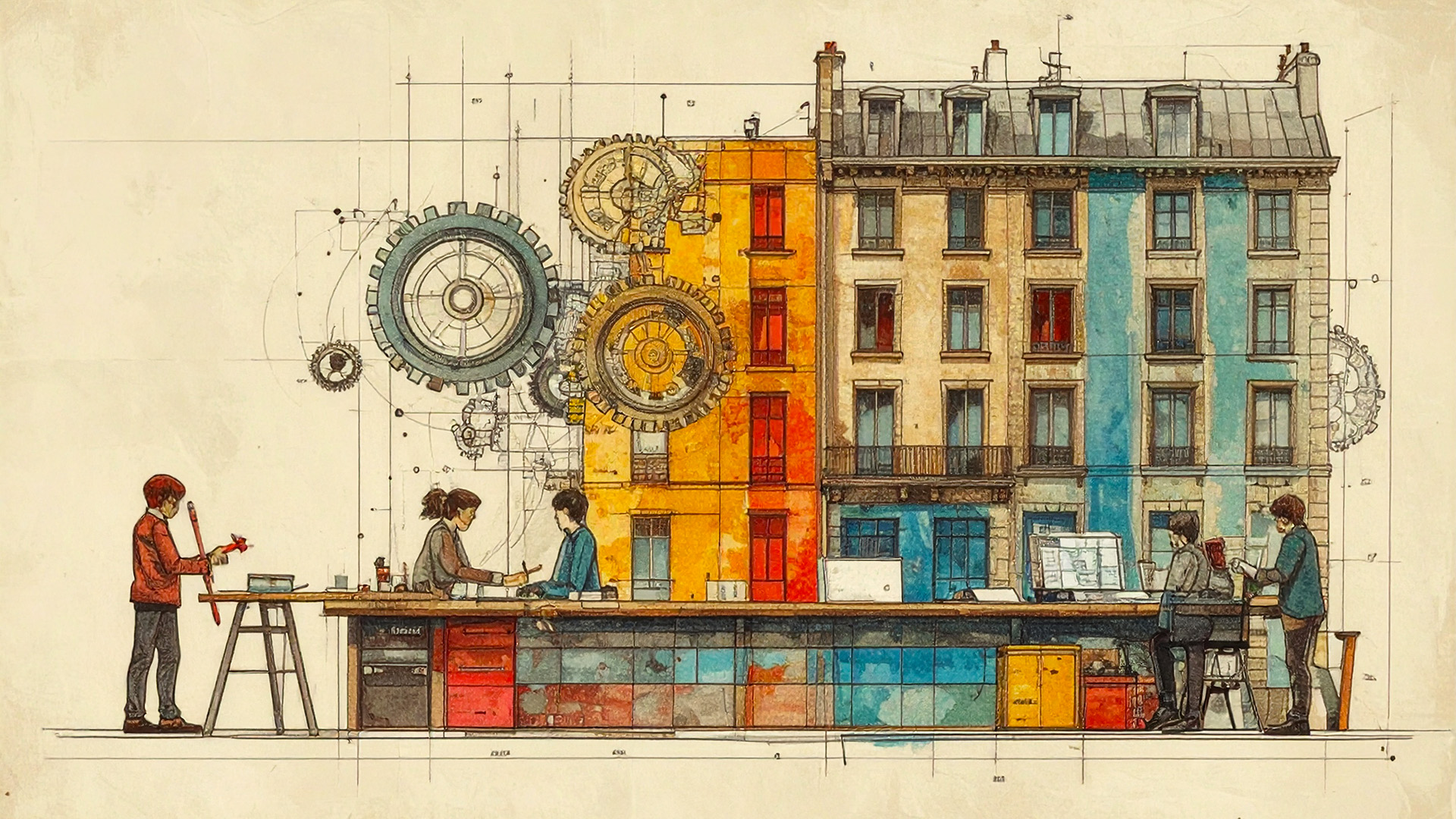

Every organization has them: the practices, rituals, and beliefs that are deemed “sacred.” They might take the form of a budgeting process, a weekly meeting, or an annual offsite. Many know they no longer serve their intended purpose, yet no one dares to question them. These are the sacred cows of organizational life—untouchable practices that consume time, reinforce outdated norms, and quietly drain adaptability.
Layered on top of these sacred cows are cultural taboos—the invisible “don’ts” of organizational behavior. Don’t question leadership in public. Don’t bring up inconvenient truths at the quarterly review. Don’t challenge the traditions that once made us successful.
Taboos aren’t written down, but they’re deeply enforced by social pressure and authority bias.
A modern operating system (e.g., Rebel OS) exists to dismantle these constraints. It reframes tradition not as a museum piece to be preserved indefinitely, but as an evolving operating code that must continue to be developed. When sacred cows and cultural taboos go unchallenged, organizations become trapped in false alignment and brittle routines. When leaders learn to expose, rewire, and replace them, tradition becomes a renewable resource rather than a liability.
Sacred Cows: When Rituals Overstay Their Welcome
Sacred cows often start as well-intentioned practices. The annual planning cycle once brought clarity. The Friday leadership call once ensured accountability. The recognition program once boosted morale. But over time, the purpose fades while the ritual remains.
The danger of sacred cows is not their presence—it is their immunity from challenge. Because they are considered “untouchable,” they live outside the organization’s feedback loops. Leaders assume they’re harmless, but in reality, they represent sunk cost, reinforce inertia, and model the wrong behavior: that some traditions are beyond scrutiny.
Case in point: the annual performance review. In many companies, it has become an elaborate ritual of paperwork and ratings that neither develops people nor improves performance. Yet it persists because it is “what we’ve always done.” Meanwhile, progressive companies have replaced it with real-time coaching, peer-driven feedback, and short-cycle check-ins. They rewired tradition, rather than preserving an outdated relic.
Cultural Taboos: The Silence That Suffocates
If sacred cows are visible rituals, cultural taboos are the invisible walls of organizational life. They show up in the topics no one raises, the questions left unasked, and the truths left unspoken.
At one global manufacturer, junior engineers described how they were discouraged from pointing out design flaws in meetings. “We don’t challenge the architect” had become a cultural taboo, and the result was costly rework and repeated safety issues. The company had smart talent, but taboos silenced the very voices that could surface risk early.
A modern operating system treats taboos as signals of fragility. They indicate where authority bias, fear, or nostalgia has overridden truth. By embedding dissent protocols (e.g., red teams, rebel boards, Why Not Stamps, etc.), organizations institutionalize the act of breaking taboos—not recklessly, but productively. A taboo that says, “don’t challenge the boss” becomes replaced with a norm: “it’s your responsibility to challenge the idea, not the person.”
Tradition as Operating Code
Tradition itself is not the enemy. Traditions encode values, create continuity, and sustain meaning across generations of employees. They are the “operating code” of organizational culture. The problem arises when the code is left unpatched—full of bugs, loopholes, and obsolete instructions.
A modern operating system reframes tradition as a living system, subject to version control. Some traditions deserve preservation (e.g., rituals that reinforce trust and belonging). Others need to be rewritten (e.g., planning cycles redesigned for speed and agility). And some must be retired entirely (e.g., reporting rituals that consume effort but produce dead data).
A true “thinking stack” provides a structured method for this renewal. Leaders run audits to identify what is truly valuable, use dissent protocols to challenge assumptions, and apply tools like the Status Quo Eraser to retire practices past their half-life. Tradition becomes not a museum but a laboratory for renewal.
How a Modern Operating System Dismantles Cows and Taboos
A modern operating system offers a repeatable playbook to surface and rewire the sacred cows and cultural taboos that stall progress:
- Catalog the Cows – List every major ritual, meeting, or process. Ask: Which of these do we keep doing simply because they’re familiar?
- Expose the Taboos – Invite employees at every level to share what topics or questions feel “off-limits.” These silences are where risk hides.
- Interrogate Value – For each tradition or taboo, ask: Does this increase speed, trust, or clarity—or does it only preserve comfort?
- Run Pilot Retirements – Suspend one sacred cow or break one taboo in a controlled setting. Measure what happens.
- Rewire with Purpose – Replace outdated rituals with tools like dissent audits, Failure Resumes, Anti-Meeting Manifests, or Dead Data Detoxes. These fresh rituals reinforce candor and adaptability.
- Celebrate the Act of Challenge – Make it visible when a sacred cow is retired or a taboo is broken. Signal that courage is rewarded and that challenge is expected.
Leader’s Checklist—Tradition Through a Modern Lens
Ask: Which rituals energize us, and which merely comfort us?
Observe: Where are people silent when they should be speaking?
Experiment: Retire one tradition for 90 days. Track the impact.
Replace: Introduce one new ritual that encodes dissent or trust.
Rehearse Recovery: When trust breaks, do you have protocols to repair it?
From Museum to Laboratory
Sacred cows and cultural taboos are not harmless quirks of organizational culture—they are silent architects of inertia. Left unexamined, they anchor companies to outdated operating ways of working, shielding rituals from scrutiny while starving innovation of oxygen. They place tradition into a museum-like glass case—displayed, admired, but untouchable.
A modern operating system insists on smashing that glass. It reframes tradition as dynamic code, something that must be debugged, patched, or even rewritten if it no longer serves the mission. In this shift, sacred cows become test cases, not relics. Cultural taboos transform from unspoken prohibitions into explicit opportunities for challenge and redesign.
The real prize is not iconoclasm for its own sake, but liberation of energy and trust. Organizations that treat tradition as a laboratory don’t abandon heritage—they evolve it. They harness dissent to create sharper strategies, they preserve only those rituals that renew belonging, and they institutionalize courage as an operating norm.
In a modern operating system, progress is the only sacred principle. Every ritual, every tradition, every unspoken rule is fair game for interrogation. The organizations that thrive will not be those that preserve their museums most carefully, but those that leverage their laboratories most boldly.