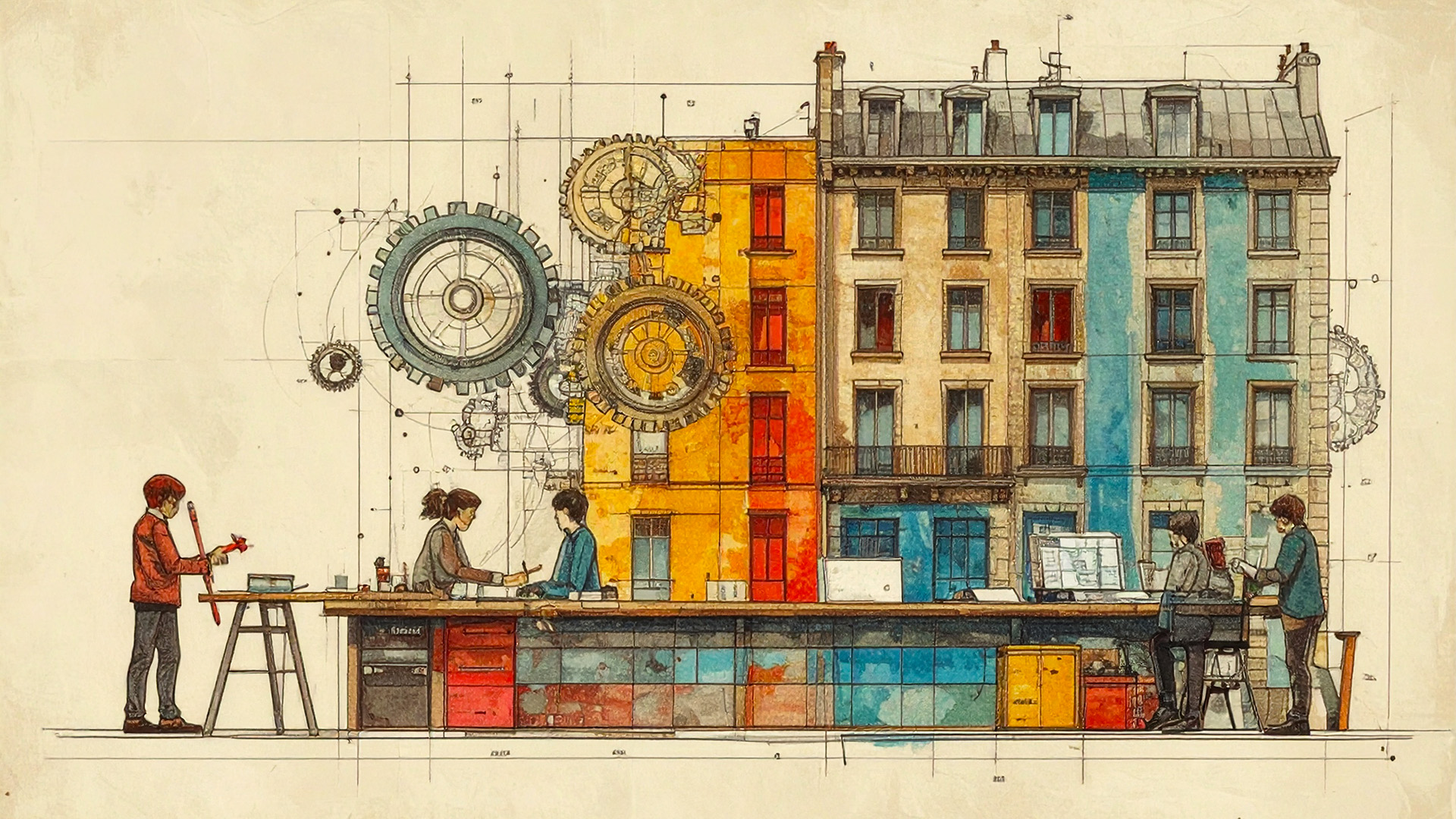

Corporate culture has long been described as DNA, as if it were fixed, inherited, and largely unchangeable. Leaders tell themselves culture is “who we are,” full stop. But treating culture as permanent identity ignores the pace of disruption, the volatility of customer needs, and the rapid rewiring of talent expectations. What once differentiated you soon becomes dead weight.
This is why culture reboot conversations have become urgent. As explored in Culture Shot, legacy norms can quietly strangle performance—slowing decisions, discouraging risk, or clinging to slogans long past their expiration date. But rebooting every few years isn’t enough either. It’s reactive, painful, and often cosmetic.
The Case for a Cultural Flywheel
True competitive advantage lies in building what I call a culture flywheel: an operating system of habits and rituals that naturally renew themselves, where adaptation is the default, not the exception.
The flywheel is a powerful metaphor in business because of its physics: once in motion, it sustains momentum with minimal additional force. A culture flywheel works the same way. Instead of requiring periodic heroic interventions—a new CEO, a reorg, or a crisis—organizations with a flywheel build cultural practices that self-adjust.
How a Culture Flywheel Works
At its core, a culture flywheel thrives on ritualized renewal, where the way an organization works is designed to refresh itself through routine practices. It spreads ownership broadly, so culture is not relegated to HR or Leadership but actively shaped by teams at every level. It carries adaptive memory, treating legacy practices as lessons to be evolved rather than monuments to be preserved. And most importantly, it ties every cultural behavior explicitly to business outcomes—innovation, speed, trust, or resilience—so culture isn’t an abstract feel-good exercise but a strategic engine.
- Microsoft: From Fortress to Flywheel – When Satya Nadella took over Microsoft in 2014, he inherited a fortress culture: internal silos, political turf wars, and a “know-it-all” ethos. Nadella reframed the company around a “learn-it-all” mindset. But crucially, he didn’t treat culture as a one-off transformation. He embedded cultural renewal into the operating system. Annual hackathons now involve tens of thousands of employees across functions, surfacing bold ideas and erasing silos. Leadership 360 reviews focus on whether managers encourage growth mindsets, not just deliver results. And rituals like “One Microsoft” meetings force cross-divisional collaboration. Over time, these practices created a self-reinforcing loop: employees expect cultural experimentation, leaders model it, and successes get codified into norms. The flywheel spins.
- Netflix: A Living Culture Document – Netflix has long been hailed for its culture deck, but what makes it powerful isn’t the manifesto itself—it’s the fact that the document is constantly edited. Unlike static corporate values carved into lobby walls, Netflix’s cultural code evolves with business context. For example, its early focus on “freedom and responsibility” reflected a startup ethos. As the company scaled globally, it introduced sharper guardrails around decision-making and financial stewardship, while still protecting autonomy. By treating its culture as a living artifact—open to revision, debate, and iteration—Netflix built a cultural flywheel that can flex without losing its core.
Rituals, Dissent and Measurement
First, building a cultural flywheel begins with making renewal a deliberate practice. After every major project or product launch, the best companies don’t just review outcomes—they dissect cultural behaviors. They ask whether the team adapted quickly, whether dissent was welcomed, or whether risk aversion crept back in. These “cultural autopsies” ensure that lessons don’t fade but are codified into new rituals that can be repeated across the enterprise.
The flywheel also depends on embedding dissent into its machinery. As argued in The Rebel Advantage, organizations cannot afford to confuse politeness with progress. Leaders who rotate “rebel roles” into cultural routines ensure that every ritual is stress-tested by someone empowered to challenge it. Their job is not to sow chaos but to keep the flywheel honest, surfacing blind spots before they harden into dogma.
Second, measurement, too, must shift. Traditional engagement surveys or cultural slogans tend to flatten nuance and create the illusion of clarity. In contrast, a flywheel culture measures momentum: how quickly outdated practices are retired, how rapidly new ones are adopted, and how many rituals evolve without waiting for a crisis. Momentum, not compliance, is the real sign of vitality.
Third and finally, organizations that succeed in sustaining a cultural flywheel understand the power of narrative. Culture is story as much as practice, and the stories that circulate inside a company can accelerate or stall the flywheel. Sharing examples of when teams killed zombie rituals, rewrote outdated processes, or successfully challenged norms reinforces the expectation that renewal is part of daily work. Narrative lubricates the mechanics of adaptation, making change feel not imposed but organic.
- Shopify: Canceling Meetings to Spark Renewal – Consider Shopify, which famously canceled all recurring meetings over 50 people in 2023. What looked like a one-off stunt was actually part of a deeper cultural flywheel. Shopify leaders wanted to embed experimentation into the cadence of work. By wiping the slate clean, they forced teams to consciously choose which rituals mattered. The practice stuck—not because of the edict, but because it was part of a loop: question assumptions, try bold changes, codify what works.
- Amazon: Principles vs. Adaptive Guardrails – Or take Amazon, whose leadership principles are treated not as commandments but as adaptive guidelines. When customer obsession started driving unhealthy internal burnout, leaders introduced mechanisms like “two-pizza teams” and working-backward documents to balance intensity with sustainability. Each adjustment became part of the flywheel, preventing culture from calcifying into dogma.
Disruption cycles are shortening. Hybrid work, generative AI, geopolitical shocks—each reshapes how people work and what they expect from organizations. Companies that rely on episodic culture resets will always lag behind events. Those with a culture flywheel will already be in motion, adapting in real time.
Guiding Principles for Building a Culture Flywheel
When constructing a culture flywheel, leaders need a compass—principles that guide the design and ensure it spins with purpose rather than chaos. Five to seven guiding principles stand out:
- Renewal Over Preservation – Treat culture as a renewable resource, not a fixed asset. Every practice should carry a built-in mechanism for refresh.
- Distributed Ownership – Culture cannot be delegated to HR or leadership committees. Every team must see itself as a co-designer of rituals and norms.
- Embedded Dissent – Healthy challenge keeps the flywheel honest. Without it, rituals drift toward politeness theater and decay into conformity.
- Outcome Anchoring – Culture is not about values on walls. Every ritual should link back to tangible business outcomes—speed, trust, innovation, or resilience.
- Narrative as Reinforcement – Culture lives in the stories employees tell. Codify and share examples of adaptation so that renewal becomes aspirational, not optional.
- Momentum as the Metric – Measure the velocity of cultural change—how fast outdated rituals are retired, how quickly new ones spread—not static engagement scores.
- Flexibility Within Guardrails – Provide freedom to adapt locally while keeping a few non-negotiables (ethics, inclusion, customer trust) as stabilizers.
Steps to Introducing the Culture Flywheel to the Organization
A culture flywheel can falter if introduced poorly. Non-believers will dismiss it as another management fad unless rollout is deliberate and inclusive. The steps below help maximize acceptance while neutralizing resistance:
- Set the Frame – Introduce the flywheel as an operating system, not a program. Position it as the design for “how we adapt” rather than a one-off initiative.
- Showcase Early Proof – Pilot the flywheel in a few visible areas. Highlight wins—faster decisions, improved collaboration, innovation that emerged—before scaling broadly.
- Empower Champions at All Levels – Identify credible employees (not just executives) to act as “flywheel ambassadors.” Their peer legitimacy builds grassroots belief.
- Tell Stories, Not Slogans – Share narratives of rituals that were retired, rebels who challenged the norm, and teams that codified new practices. Stories resonate; slogans fade.
- Address Skeptics Directly – Bring non-believers into the process early. Give them a voice in shaping rituals. When their critiques are absorbed into the flywheel, resistance turns to ownership.
- Integrate Into Existing Rhythms – Embed flywheel reviews into quarterly business reviews, leadership check-ins, or retrospectives. This normalizes culture as part of core business, not a side project.
- Protect It From Erosion – Leaders must consistently defend the flywheel against short-termism or the temptation to revert to episodic resets. Momentum needs guardianship.
The Antidote to Legacy
In Culture Shot, I argued that legacy cultures become liabilities. The flywheel is the antidote: a design for cultures that refuse to become legacy in the first place. Culture should not be a museum piece—admired but untouchable. Nor should it be a crisis project dusted off only when performance slides. Culture must be kinetic: always moving, always learning, always renewing.
The organizations that thrive will be those that treat culture not as identity to be preserved, but as energy to be spun. Because when culture reinvents itself, strategy doesn’t need saving. It accelerates.