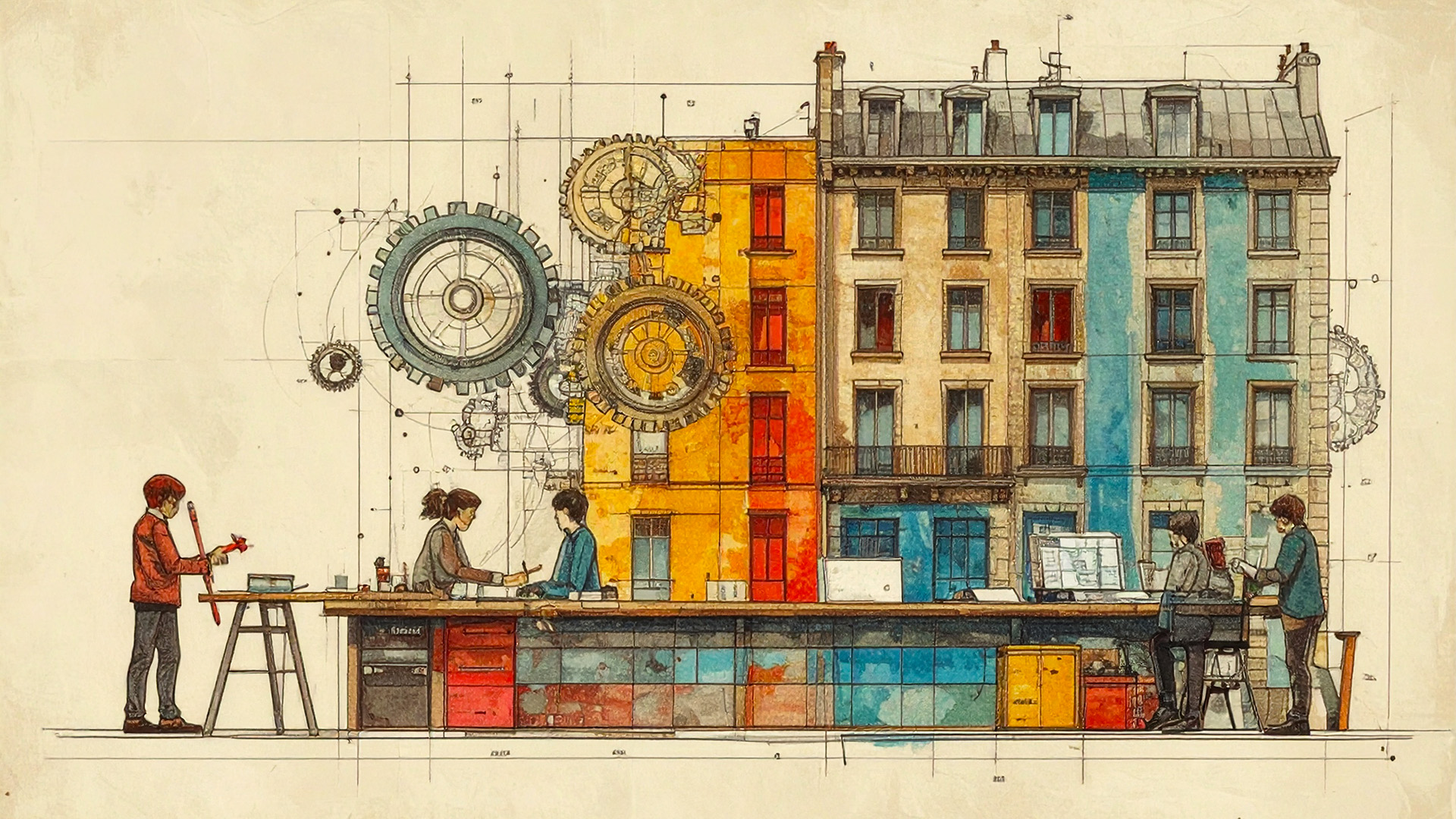

By all accounts, corporate culture is no longer a “nice to have.” It’s a living, breathing operating system that underpins how a company competes, adapts, and grows. When healthy, it creates clarity, drives innovation, and becomes a magnet for talent. But when outdated or misaligned, culture can quietly stall progress, create friction, and sap the energy from an organization that once thrived on momentum.
Peter Drucker’s famous adage, “Culture eats strategy for breakfast,” still rings true today—though perhaps it understates just how quickly culture can consume performance when left unchecked. In a world of relentless disruption and rising stakeholder expectations, yesterday’s winning culture can easily become today’s anchor.
So, what happens when culture stops propelling your company forward and starts holding it back? The answer is certainly not to discard it altogether—but to give it a shot in the arm. And that’s where a structured playbook for rebooting culture becomes essential.
The Cultural Lifecycle: From Differentiator to Drag
Great cultures often begin with a founder’s passion, a shared mission, and the energy of a tight-knit team committed to building something meaningful. Think of the early days of Apple, Zappos, or Netflix—cultures so clear and contagious that they became brand assets in their own right. In those formative years, culture is self-reinforcing. It fosters resilience, camaraderie, and a “we know who we are” clarity that fuels growth.
But the forces that shape a business—markets, technologies, customer needs, and employee expectations—do not stand still. As Satya Nadella, CEO of Microsoft, has said, “Our industry does not respect tradition—it only respects innovation.” The same can be said for culture.
Over time, high-performing companies can become prisoners of their own playbook. Decision-making slows. Risk aversion rises. Employees repeat mantras like “That’s not how we do things here” or “We’re different”—once rallying cries, now red flags. What began as identity calcifies into ideology.
These cultural warning signs may not appear on a dashboard, but they are felt everywhere: stalled revenue growth despite solid market opportunity, sluggish decision cycles, rising attrition, persistent change resistance, and leadership messages that fall flat. These are not people problems. They are culture problems.
Recognizing When Culture Needs a Reboot
Every CEO and executive team must develop a sharp instinct for cultural inflection points—moments when the very thing that made the organization great must be reexamined to stay relevant.
One of the clearest triggers for a cultural reboot is market disruption. When industries are reshaped by digital transformation, artificial intelligence, or new customer channels, legacy cultures rooted in process-heavy, hierarchical models can’t keep pace. Retailers, for example, that failed to evolve in response to e-commerce found their cultures—once prized for operational excellence—became barriers to agility and innovation. These shifts demand cultures that reward speed, experimentation, and digital fluency.
Internal transformation is another major driver of cultural misalignment. Mergers, acquisitions, restructurings, and leadership transitions all disrupt the existing social contracts within an organization. Even seemingly positive changes can create confusion or resistance if they clash with the embedded norms of how people work and interact. Without a clear cultural integration strategy, internal transformation can lead to fragmentation, fear, or paralysis.
A third sign is growth plateauing despite a strong strategy and capable team. In these cases, it’s not that the business model is broken—it’s that the culture is no longer enabling performance. Legacy mindsets, risk aversion, or bureaucratic processes creep in. As Intel’s Andy Grove warned, “Success breeds complacency. Complacency breeds failure.” Culture, once an accelerant, has become a drag coefficient.
Employee disengagement is another red flag. When people stop believing, caring, or contributing beyond the bare minimum, the cultural foundation is cracked. Gallup’s 2024 data shows that disengagement is costing the global economy $8.9 trillion in lost productivity. That isn’t an HR problem—it’s an executive one. A healthy culture energizes employees. A toxic or indifferent one depletes them.
Then there is the evolution of the customer. Today’s buyers—especially in B2B and B2C markets—expect more than products and services. They want experiences that reflect shared values, ethical practices, and personalized engagement. A culture that isn’t customer-centric, or one that doesn’t evolve with the customer, will fall behind. It’s not enough to have customer service teams; customer-centricity must be baked into the culture.
Perhaps the most dangerous trigger of all is leadership denial. When senior executives fail to recognize cultural stagnation—or worse, romanticize it—they create blind spots that damage morale and performance. Reed Hastings, co-founder of Netflix, famously said, “Do not tolerate brilliant jerks. The cost to teamwork is too high.” The same can be said for brilliant leaders who refuse to adapt. A company can’t out-execute a culture that no longer fits.
The Seven-Step Playbook for Cultural Reboot
Rebooting culture is not a side project—it’s a strategic imperative. Done right, it reinvigorates performance, strengthens brand identity, and reconnects employees to purpose. The following seven steps form a repeatable, actionable playbook to guide organizations through successful cultural renewal.
Step 1: Start with the Truth
Every transformation begins with an honest diagnosis. Conduct a comprehensive cultural assessment to identify what’s working, what’s outdated, and where friction lies. Look beyond slogans and surface-level values—explore the lived reality of how decisions are made, how power operates, and how people feel. Use external facilitators to provide objectivity and surface the “shadow culture”—the unwritten norms that drive behavior.
Step 2: Define What’s Next
Articulate a clear vision for the future-state culture. This isn’t about wordsmithing new values—it’s about linking desired behaviors to business outcomes. What kind of culture does your strategy require? What new habits, rituals, and mindsets will define success? As Indra Nooyi has said, “Culture has to change with strategy, and strategy has to be dynamic with culture.”
Step 3: Model from the Top
Cultural change lives and dies with leadership behavior. Executives must embody the desired culture in how they communicate, decide, and lead. Words are not enough. Teams watch for consistency—and inconsistency breaks trust. As soon as leaders revert to old habits, the organization follows suit.
Step 4: Engage the Middle
Middle managers are the cultural bridge between aspiration and execution. Equip them with tools, language, and permission to lead culture in their teams. Don’t just train them—activate them. Their buy-in is the fastest path to scale.
Step 5: Make it Real
Embed the culture in everyday systems. Revise hiring practices, onboarding, performance metrics, and promotion criteria to align with the desired behaviors. Culture is what gets rewarded and what gets tolerated. If those mechanisms don’t change, neither will the culture.
Step 6: Communicate with Intent
Storytelling and transparency drive adoption. Explain the “why” behind the culture shift—why now, what’s changing, and what’s staying. Create feedback loops and open forums. The more two-way the communication, the more trust is built. Consistency and clarity are more important than charisma.
Step 7: Celebrate Small Wins
Culture change happens through moments, not mandates. Publicly recognize teams and individuals who demonstrate the new behaviors. Use their stories to build momentum. Over time, these cultural signals form a new normal.
This seven-step playbook is not a theoretical exercise—it is a roadmap for execution. It helps organizations avoid the trap of performative culture efforts and instead achieve true behavioral change, reinforced at every level of the enterprise.
Change Management: The Unsung Hero
No cultural transformation succeeds without disciplined change management. Culture is emotional, behavioral, and personal. It must be treated with the same rigor as a major business initiative.
Effective change management links strategy to people. It anticipates resistance, guides adoption, and accelerates buy-in. Companies that embed strong change practices are 6x more likely to achieve their objectives, according to Prosci. Yet most underinvest in this work or treat it as a communications function rather than a leadership imperative.
As Harvard’s Rosabeth Moss Kanter noted, “Change is disturbing when it is done to us but exhilarating when it is done by us.” Cultural revitalization must feel co-created, not top-down.
The Strategic Value of Culture
Culture isn’t about free snacks or ping-pong tables—it’s about strategic advantage. It shapes how decisions get made, how quickly teams move, how customers are treated, and whether innovation is sustained. It is the invisible architecture that either enables performance or erodes it.
In an age where talent is mobile, trust is fragile, and disruption is constant, culture is one of the few sustainable sources of differentiation. Companies that get it right are more agile, more resilient, more magnetic and enjoy sustainable growth. As Brian Chesky, CEO of Airbnb, put it, “Culture is simply a shared way of doing something with a passion.” The question is: what are you doing, how are you doing it, and is it still working?
If not, it may be time to stop reminiscing—and start reimagining. Because the real cost of a stagnant culture isn’t just disengagement—it’s irrelevance!